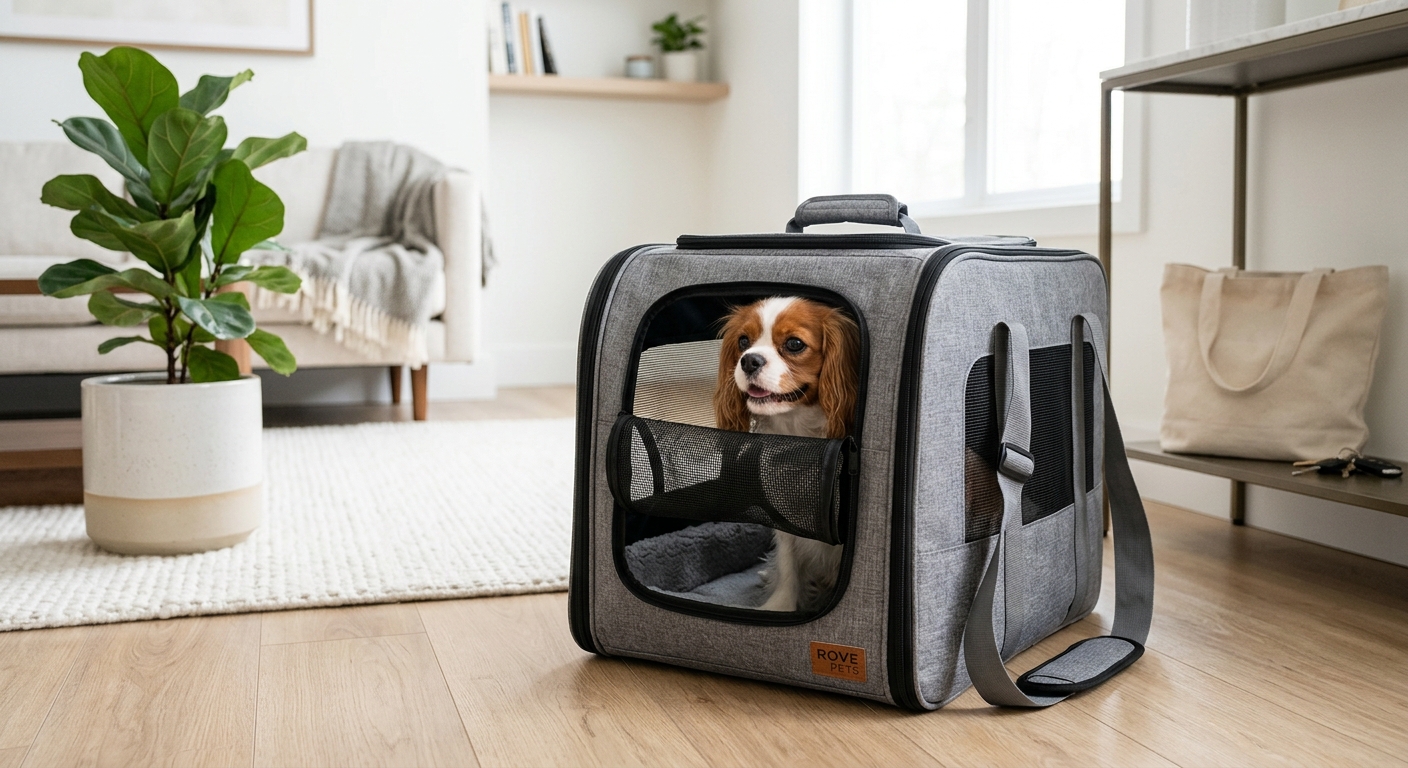
A pet carrier is essential for vet visits, travel, and emergencies. The right carrier keeps your pet safe, comfortable, and secure during transport. Whether you are driving across town or flying across the country, choosing a carrier that fits your pet and meets your travel needs is critical. This guide covers everything from sizing to materials to safety features.
Why Carrier Choice Matters
A poorly chosen carrier can cause stress, injury, and travel complications. A carrier that is too small restricts movement and airflow. One that is too large allows your pet to slide around during transport, increasing the risk of injury. The right carrier provides just enough room for your pet to stand, turn around, and lie down comfortably while remaining secure during movement.
Choosing the Right Size
Measure your pet before shopping for a carrier:
- Measure from the top of the head to the ground for height (add 2-3 inches).
- Measure from the nose to the base of the tail for length (add 2-4 inches).
- The carrier should allow your pet to stand up fully and turn around without difficulty.
For airline travel, check your specific carrier's dimension requirements. Most airlines require soft-sided carriers that fit under the seat in front of you, typically around 12 x 10 x 8 inches for small pets.
Material Options
Polyester Carriers
Polyester is the most common material for soft-sided pet carriers. It is lightweight, durable, and water-resistant. Look for carriers with mesh ventilation panels on multiple sides to ensure adequate airflow. Polyester carriers fold flat for storage and are easy to wipe clean.
Hard-Sided Carriers
Hard-sided plastic carriers provide maximum protection and are required by some airlines for cargo travel. They are heavier and less portable than soft-sided options but offer superior crash protection. The rigid shell prevents the carrier from collapsing under pressure.
Carrier Beds
Some carriers double as beds, providing a comfortable resting surface that transitions seamlessly from home to travel. These hybrid designs reduce the stress of transferring your pet between a bed and a carrier. Look for models with removable, washable pads.
Essential Features
- Ventilation: Mesh panels on at least two sides ensure airflow and prevent overheating.
- Multiple entry points: Top-loading carriers make it easier to place anxious pets inside.
- Removable, washable pad: Accidents happen during travel. A washable pad keeps the carrier clean.
- Seat belt loop: A strap that loops through the car's seat belt keeps the carrier from sliding during transport.
- Storage pockets: Side pockets hold treats, waste bags, and vaccination records.
- Secure closures: Zippered openings with locking capability prevent accidental escapes.
Getting Your Pet Comfortable with the Carrier
Introduce the carrier gradually before travel day:
- Leave the carrier open in your home with a soft blanket inside.
- Place treats and toys inside to encourage voluntary entry.
- Feed meals near the carrier, then inside it.
- Close the door for short periods while staying nearby.
- Take short car trips to associate the carrier with positive experiences.
Never force your pet into a carrier or use it as punishment. The carrier should always be associated with positive experiences.
Safety During Travel
- Never leave your pet unattended in a carrier in a parked car.
- Secure the carrier with a seat belt during car travel.
- Bring water and offer it frequently during long trips.
- Line the carrier with an absorbent pad in case of accidents.
- Keep vaccination records with you when traveling.
Conclusion
Choosing the right pet carrier comes down to measuring your pet, selecting a material that suits your travel needs, and ensuring the carrier has proper ventilation and safety features. Whether you need a lightweight polyester carrier for vet visits or a crash-tested hard-sided carrier for air travel, the right carrier makes every trip safer and less stressful. Browse our pet carrier collection to find the right option for your next journey.