Pets are sensitive to their environment. Loud noises, temperature changes, unfamiliar visitors, and even furniture layout can affect their stress levels. Creating a dedicated, comfortable space for your pet is one of the most effective ways to reduce anxiety and improve their overall well-being. This guide covers practical steps to transform any corner of your home into a calming retreat for your dog or cat.
Why a Dedicated Space Matters
Dogs and cats are den animals by nature. In the wild, they seek enclosed, safe spaces to rest and recover. A dedicated space in your home serves the same purpose — it gives your pet a predictable, secure area where they can retreat when overwhelmed. Without a designated space, pets may develop anxiety behaviors like excessive barking, destructive chewing, or hiding under furniture.
Choosing the Right Location
The location of your pet's space affects how much they use it. Look for a spot that is:
- Quiet: Away from appliances, TVs, and high-traffic doorways. A corner of a bedroom or living room works well.
- Temperature-stable: Avoid drafty windows, heating vents, and direct sunlight. Pets regulate body temperature differently than humans.
- Visible but not central: Your pet wants to be near family activity without being in the middle of it. A spot where they can see the room but are not in the main walkway is ideal.
- Non-slip flooring: Place the bed on a rug or mat if the floor is hardwood or tile. Sliding beds cause anxiety and discourage use.
The Foundation: A Quality Pet Bed
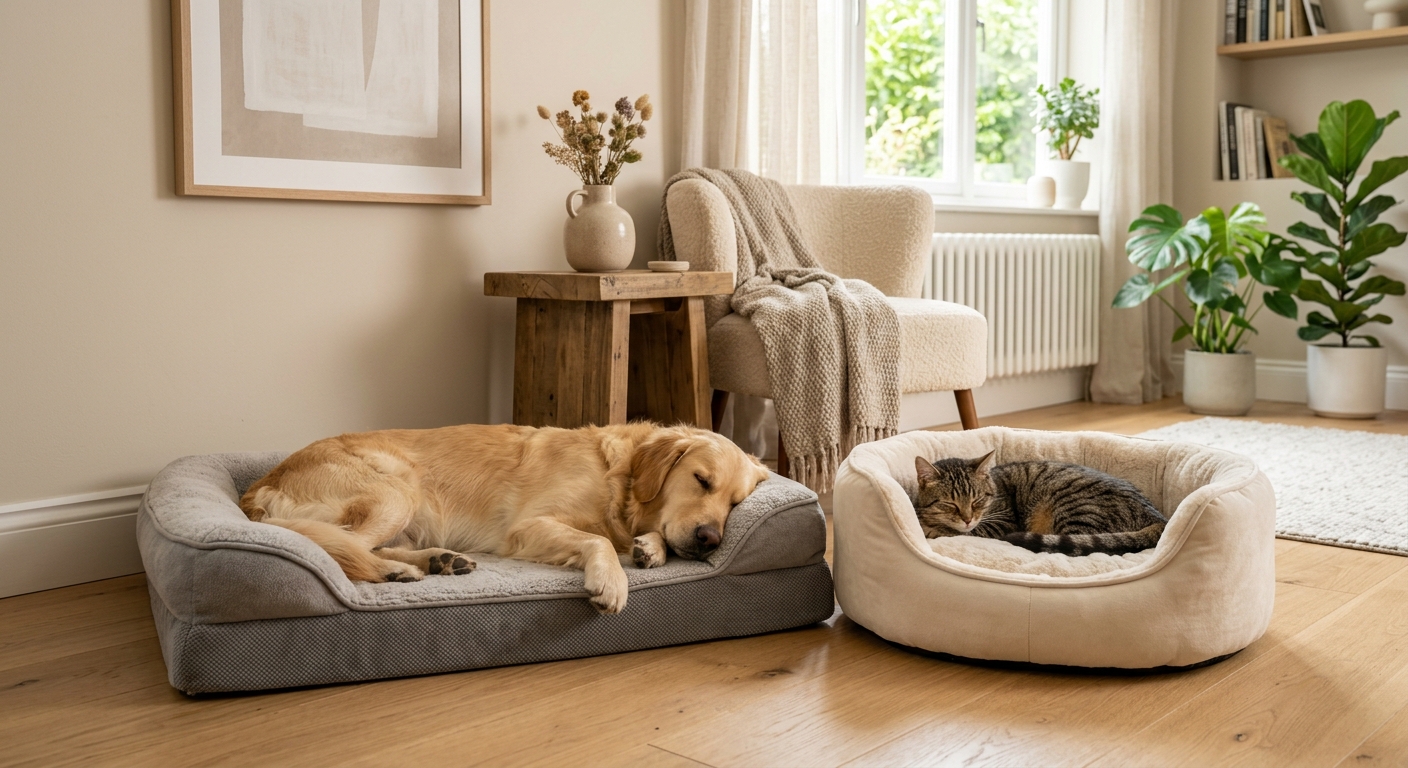
The bed is the centerpiece of your pet's space. Choose based on your pet's needs:
- Senior dogs: Memory foam orthopedic beds relieve joint pressure and improve sleep quality. The thick foam supports arthritic joints and prevents stiffness.
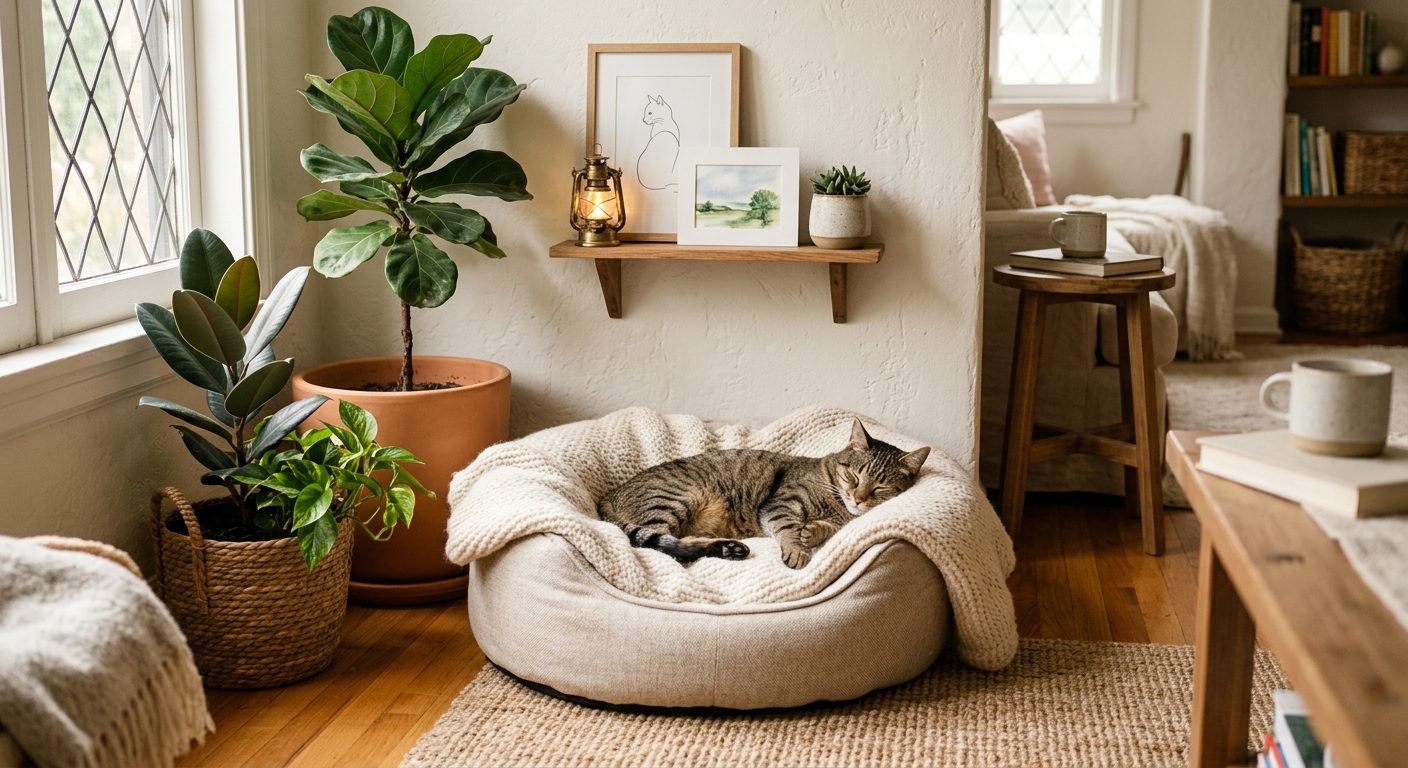
- Anxious cats: Faux fur donut beds with raised edges create a nesting effect that helps anxious cats feel enclosed and secure. The soft texture provides tactile comfort.
- Cats who love height: Window perches and elevated hammocks satisfy a cat's natural desire to observe from above while providing a comfortable resting surface.
- Eco-conscious homes: Hemp and organic cotton beds are naturally breathable and antimicrobial, making them ideal for pets with sensitive skin or allergies.
Reducing Anxiety in the Space
Calming Scents
Certain scents can promote relaxation in pets. Use pet-safe diffusers placed away from your pet's bed, or try pheromone sprays designed specifically for dogs and cats. Never apply essential oils directly to your pet's skin.
Background Noise
Complete silence can make pets more alert to every sound. Low background noise masks sudden sounds that trigger anxiety:
- Classical music at low volume has been shown to reduce stress in pets
- White noise machines mask outdoor sounds like thunder and traffic
- TV or radio at low volume provides familiar human sounds
Temperature and Comfort
Pets cannot tell you when they are too hot or cold. Watch for signs:
- Too cold: Curling tightly, shivering, seeking warm spots like heating vents
- Too hot: Stretching out on cool floors, panting, seeking tile surfaces
Adjust the space seasonally. In winter, add a warm blanket to the bed. In summer, switch to a breathable bed or place a cooling mat underneath.
Enrichment and Comfort Combined
A comfortable space is not just about the bed. Add elements that make the space enriching:
- A few favorite toys placed nearby
- A water bowl within easy reach
- A scratching post near a cat's bed
- A soft blanket that smells like family members
Conclusion
Creating a cozy and comfortable space for your pet is a simple but powerful way to improve their quality of life. By choosing the right location, providing a supportive bed, managing temperature, and incorporating calming elements, you give your pet a sanctuary where they can rest and recharge. The result is a calmer, happier, and healthier companion. Browse our collection of pet beds to start building your pet's perfect space.